If you’ve lost a spouse or you’re handling inherited real estate in Oregon, the valuation decisions you make now can affect taxes years down the road if you ever decide to sell. In most cases, the key is establishing a defensible fair market value on the correct effective date—and documenting it in a way that holds up if questions come up later from the IRS.
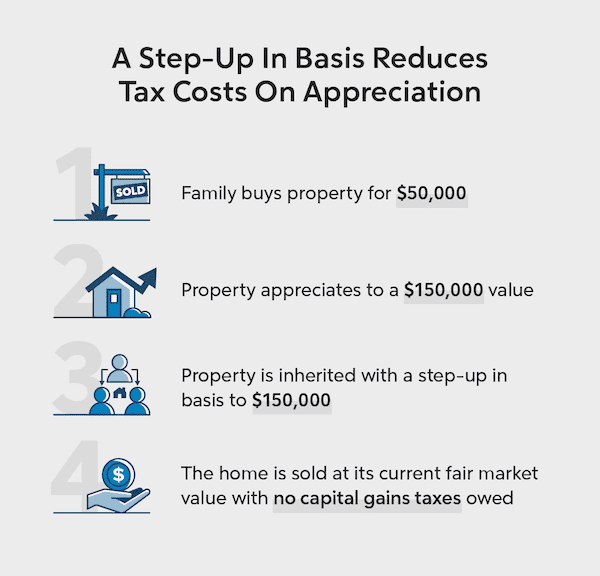
When someone dies, the tax treatment of real estate changes, and its value must be re-established as of the date of death. The IRS explains that to determine whether the sale of inherited property is taxable, you must first determine your basis in the property. The basis of property inherited from a decedent is the fair market value (FMV) of the property on the date of the decedent’s death (whether or not the executor files an estate tax return), or the FMV on the alternate valuation date if a Form 706 is filed and that election is made. If you sell the property for more than your basis, you have a taxable gain.
What “IRS fair market value” means
For IRS-related valuation questions, FMV is not a casual estimate. FMV is generally defined as the price the property would sell for on the open market—the price agreed upon by a willing buyer and willing seller, with neither required to act, and both having reasonable knowledge of the relevant facts.
That definition drives how a date-of-death appraisal is developed: it’s a retrospective analysis tied to a specific effective date, with opinions and conclusions supported by market evidence that can be followed by a third party.
Date-of-death appraisal and step-up in basis appraisal
A date-of-death appraisal (often called an estate appraisal) answers a specific valuation problem: what was FMV as of a specific historical date—typically the date of death. That value is commonly used to support a step-up in basis under IRC §1014. Because IRC §1014 generally steps basis up to FMV at the date of death, there is usually little or no gain to account for if a sale occurs soon after the date of death (assuming limited market movement and after considering selling costs). The key is documentation: establishing an IRS-compliant date-of-death FMV is what makes the basis defensible.
These appraisals are not just for inherited property. They are also important when a spouse dies. Depending on how the property is titled and the applicable rules, the death of a spouse can trigger a partial or full basis adjustment, even if the surviving spouse keeps the property.
Estate appraisal in Oregon: why state rules matter
Oregon is not a community property state. That distinction can affect whether the step-up in basis is partial or full in a surviving spouse scenario, depending on how the property is owned and other facts. The appraisal establishes the fair market value; the client’s CPA or attorney determines how that value is applied for tax reporting.
Oregon also has an estate tax framework. Oregon generally requires an estate tax return when the total value of all estate assets was $1 million or more at death and the estate includes property taxable by Oregon. Oregon’s estate tax rates are graduated and commonly described as ranging from 10% to 16%, depending on the size of the taxable estate. This is separate from federal capital gains and basis rules, but it increases the practical importance of establishing a defensible FMV for Oregon real estate as of the date of death.
Effective date, intended use, and intended users: the foundation of the assignment
In estate work, the effective date and intended use/users are paramount. Before beginning an appraisal, the appraiser must determine the effective date (current or retrospective), the intended use, and the intended users. Different estate situations routinely involve multiple users and sometimes multiple effective dates, and those effective dates are not interchangeable.
Appraisals may be needed at different times, including:
- As of the date assets are transferred into a trust (a planning effective date before death).
- As of the date of death (date-of-death FMV for basis support and estate administration).
- As of a current date (for estate pre-listing, sale strategy, or other non-retrospective needs).
- As of the date of contribution (FMV for donated property and charitable contribution reporting).
This is why an appraiser who understands the nuances of estate work matters. Defining the assignment correctly up front prevents mismatched scope, wrong effective dates, and documentation that doesn’t fit the purpose.
Why CMAs and Zillow don’t meet IRS requirements
This is where I see confusion most often. People want to use the easiest number available—a broker CMA, a county assessor value, or a Zillow/Redfin estimate. Those tools can be useful for general reference, but they do not meet IRS requirements in situations where the IRS requires a qualified appraisal or where FMV must be substantiated in a defensible way.
A CMA is a marketing tool designed to help determine the price of a property for sale. It is not a qualified appraisal. It is typically not developed under appraisal standards, it usually lacks a properly defined scope of work, and it is not designed to be relied upon for IRS substantiation.
Zillow and Redfin estimates are automated valuation models (AVMs). They do not include an inspection, a signed appraisal certification, a defined scope of work, supported adjustments, or the type of market analysis that can be independently reviewed. They are not “qualified appraisals” for IRS purposes and they are not reliable support for a stepped-up basis if the value is later questioned.
Assessed values and county “real market values” are created for property tax administration using mass appraisal systems and standardized assessment dates. Despite similar wording, the county’s “real market value” is not the same as IRS fair market value, and assessor values are rarely adequate as primary support for basis or IRS-facing valuation requirements.
IRS-related appraisals require additional documentation (especially charitable donations)
A practical question is whether the IRS will be sent a copy of the appraisal. Often, no. Many estate appraisals are retained in the file to substantiate basis if a sale occurs later and the reported gain is reviewed.
But some assignments do involve direct IRS substantiation rules, especially noncash charitable contributions. For donated property, the effective date is the FMV on the date of contribution, and IRS reporting may require a qualified appraisal by a qualified appraiser. Online resources that commonly apply in these situations include IRS Publication 561 (Determining the Value of Donated Property), IRS real property valuation guidance used in IRS review contexts, IRS Form 8283 and its instructions, and Notice 2006-96, which addresses appraisal requirements for noncash charitable contributions.
IRS signals (in other contexts) that certified, independent appraisals matter
In at least one formal IRS compliance context—the private foundation minimum investment return rules—the IRS states that real property (including improvements) may be valued on a five-year basis by a written, certified, independent appraisal by a qualified person who is neither a disqualified person nor an employee of the foundation. The appraisal must state that the property was valued in accordance with valuation principles regularly employed in appraising that type of property using reasonable valuation methods. If properly made and reasonable, the IRS states it will not disturb that valuation during the five years, even if the actual FMV changes.
The practical takeaway is that when fair market value drives tax outcomes, the IRS repeatedly emphasizes defensible documentation and recognized valuation methodology, not informal estimates.
Probate appraisals vs. estate pre-listing appraisals
Probate appraisals help identify, inventory, and value real property within an estate so the personal representative, attorney, and court have a defensible record. This supports estate administration decisions, helps with settlement of claims, payment of debts and taxes, and ultimately supports distribution of property and funds.
Estate pre-listing appraisals are ordered when the property will likely be listed for sale after death and the estate wants a supportable value opinion to guide pricing and decision-making. These situations can be complicated by family conflict or bias—especially when stakeholders disagree about price or motivations. An independent appraisal helps reduce noise and provides a neutral benchmark.
Why clients order estate appraisals
- To create or fund a trust (and document value as of a planning effective date).
- To settle and distribute the estate (including buyouts and equitable allocation).
- To appeal or support a disputed estate valuation.
- To set a supportable sales price for a post-death listing.
- To donate real estate from an estate (where IRS substantiation may require a qualified appraisal).
Key estate terms
Executor: the individual named in a will to administer the estate.
Personal representative: the probate court-authorized fiduciary administering the estate (often the formal term used in probate).
Trustee: the fiduciary who manages assets held in a trust for beneficiaries under the trust document.
Typical estate appraisal clients and users include probate courts, attorneys, trustees, surviving family members/beneficiaries, financial planners, and accountants/CPAs.
Closing
If you need a step-up in basis appraisal, a date-of-death appraisal, or an estate appraisal in Oregon, you want the assignment defined correctly up front: effective date, intended use, intended users, and whether IRS substantiation rules apply. CMAs and Zillow-style estimates do not meet IRS requirements for qualified appraisal situations and generally do not provide defensible FMV support for estate and basis work.
If you need a step-up in basis appraisal, a date-of-death appraisal, probate appraisal or an estate appraisal in Oregon, we can help. Our certified residential real estate appraisers at Scientific Valuation, Inc., prepare IRS-focused retrospective appraisals designed to support fair market value on the correct effective date, with clear documentation that can be relied upon by attorneys, CPAs, trustees, and families. To get started, contact Scientific Valuation, Inc. at 503-550-0723 for a free consultation.